


 EDUCATIONAL VISITS Manor Farm is fully accredited by the Countryside Educational Visits Accreditation Scheme (CEVAS)
 THE FARM
Contact us for availability.

Archived News
19th August 2020
Our arable harvest 2020 drew to completion on 13th August, more swiftly than most years due to the reduced acreage sown last Autumn and the very dry weather we’ve experienced until just a couple of days ago. One advantage has been not requiring the grain drier this year; with the associated time and costs involved.
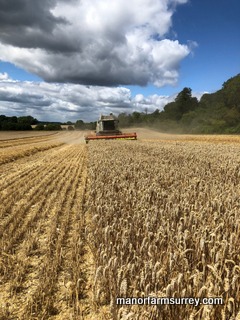
Harvesting Elicit wheat on Whitedown
To re-cap, at the end of harvest last year, two thirds of the arable land was sown with oilseed rape and wheat, however the remaining third was not sown due to the deluge of rain which began on 23rd September and barely let-up throughout winter. It wasn’t possible to access the fields and would have caused too much soil damage to even attempt it.
When the ground began to dry up this spring, it was just possible to drill 110 acres with spring barley and the remaining fields were left fallow.
We began this year’s harvest with 170 acres of oilseed rape which had an average yield, moving onto approximately 500 acres winter wheat and then the spring barley.
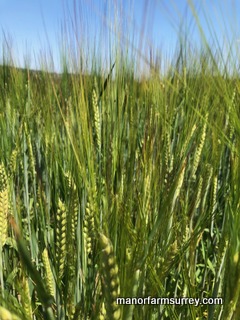
Spring barley during June
There were three varieties of milling wheat; Zyatt, Elicit and Firefly. The yields were down by as much as 50% on the lighter land and at best were an average yield. The cost of growing some of this crop was greater than the price received for the grain.
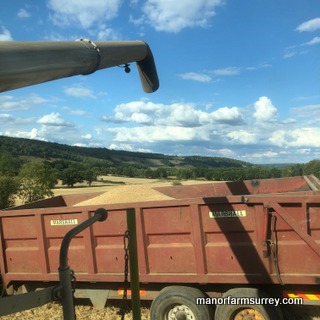
The combine harvester’s unloading pipe augers the grain into the trailer
It’s been about 20 years since we last grew spring barley and it has done quite well on the chalky, heavier soil; yielding 3 tonne an acre, some of which has been sold forward.
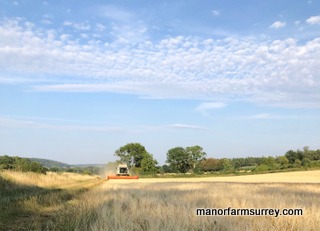
Despite the barley stems being a little green, it harvested without difficulty and the straw soon dried out in the blazing sunshine ready for baling. The grain was perfectly dry and was safely in the grain store before the rain arrived.
There were a few minor break-downs as would be expected during harvest when machinery and staff are working from 8am until 2am.
Due to the reduced acreage being harvested, plus the lower yields, this has resulted in half the number of straw bales produced.
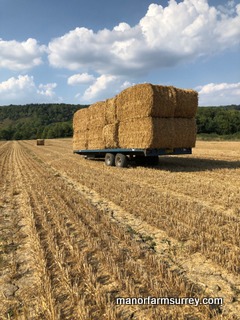
A proportion of the bales are sold off-farm and the remainder are utilised for bedding-up the Friesian x cattle overwinter or for Belted Galloway calving.
Another cash crop we grow is fodder beet, which is sown in March and harvested mainly between November and the following March, however it lasts well in the ground and we have continued to harvest this crop through the summer, as when we have an order.
We’ve had predominantly drought conditions since March with little or no grass available on many farms, therefore the fodder has been much in demand. With plenty to go around, we’ve also been supplying an Anaerobic digestion system in Surrey which takes food waste from restaurants in Surrey and London and recovers energy in the form of biogas, electricity and digestate. With restaurants closed during the Covid-19 pandemic and now only working to a lower capacity, the fodder beet has provided a consistent feedstock to keep the anaerobic digester functioning.
The digestate is an organic fertiliser which is returned to many farms around Surrey where it improves soil quality, aids water retention and avoids the use of artificial fertilisers.
Back