


 EDUCATIONAL VISITS Manor Farm is fully accredited by the Countryside Educational Visits Accreditation Scheme (CEVAS)
 THE FARM
Contact us for availability.

Archived News
1st June 2019
Spring has been relatively dry and we could do with some rain on our crops during the next fortnight as some are not as well established as they might be by now.
Last autumn 900 acres of winter wheat was sown and this spring: 70 acres of peas, 230 acres of fodder beat and 200 acres of maize, the last of which was drilled last week. Maize needs soil temperature to be around 12 degrees centigrade to germinate.
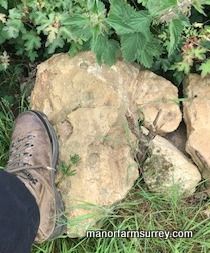
When we’re out checking crops, we may come across fairly large stones or rocks in the field which we carry to the field edge to prevent hazards when using the combine harvester. Rocks can be accidentally be lifted into the combine whilst harvesting and cause severe damage to the machine.
We have invested in a stone picker recently which will remove stones up to 35cm prior to sowing the crop in a few fields. We’ll continue to remove the larger rocks by hand.
We had a nice tight calving window this year beginning on 13th March with Wotton Sky giving birth to Wotton Sunny and Jack being born to Jo on 8th April.
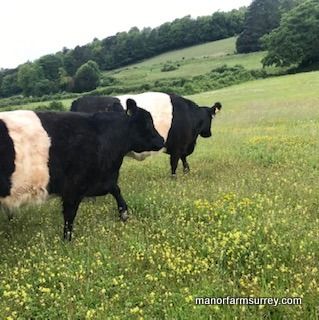
We had 11 female and 13 male calves; a total of 24 this year. This is fewer than usual due to Schmallenberg Virus (SBV) causing a number of cows to abort last year. Schmallenberg Virus is carried by midges over the sea from Europe, the midges feed on the cow’s blood and whilst doing so, transmit the virus. Those cows went on to have calves in the Autumn 2018 and were therefore out of synch with the rest of the herd this spring. Whilst I don’t wish any of the cows to slip a calf, at least I have been told that those girls are now immune to SBV.
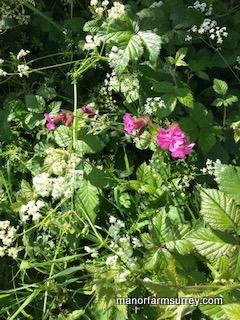
As well as growing crops and livestock for food production we also provide areas for wildlife such as ponds, woods and hedgerows as well as encouraging wildlife in arable fields by providing approximately 75km (46.6 miles) of 6 metre wide field margins, or the equivalent of about 45ha (111 acres) these include:
· margins cultivated to encourage rare arable weeds which have been found during independent plant surveys carried out for Natural England on the farm.
· over-winter stubbles, followed by fallow for ground nesting birds
· standing (unharvested) crops on headlands as winter bird food.
· areas of wildflower and grass mix
Of the land we farm, approximately 28% is not in food production but is providing a haven for flora and fauna with the hedgerows, woods, ditches, ponds and almost 50 miles of 6m field margins creating mixed habitats, a diverse patchwork landscape and wildlife corridors in which wildlife can find shelter, safety, food and water.
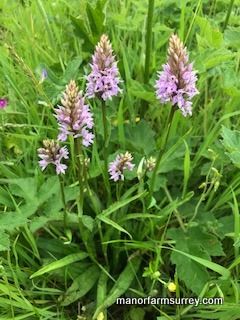
Therefore, for the benefit of wildlife on the farm, we do appreciate visitors to the countryside remaining on the public footpaths and bridleways, especially staying off the fields and the field margins and woodland so that the wildlife is encouraged, protected and left undisturbed. Please help us in our aim to safeguard and increase biodiversity on the land we farm.
Back