


 EDUCATIONAL VISITS Manor Farm is fully accredited by the Countryside Educational Visits Accreditation Scheme (CEVAS)
 THE FARM
Contact us for availability.

Archived News
16th December 2014
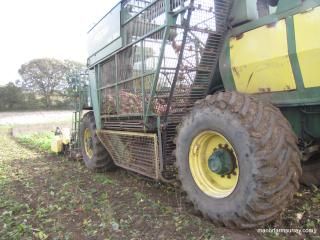
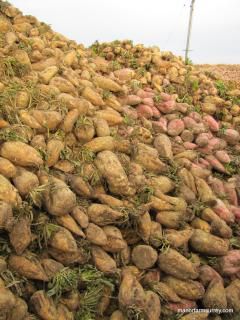
Eighty acres of fodder beet were planted this year and 630tonnes have been lifted from the first twenty acres.
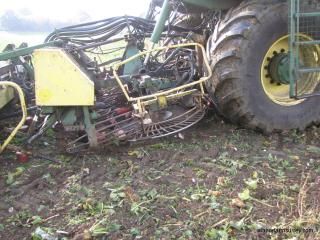
We feed the fodder beet to the cattle as part of their winter rations as well as selling to other farmers direct, or via The Ring of Agricultural Machinery in Sussex and Kent (RAMSAK) which is a co-operative set up to share farming resources amongst farming neighbours.
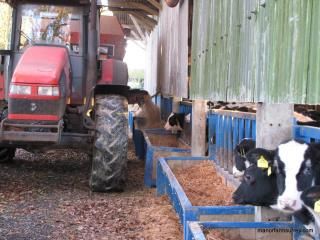
The Friesian-X cattle are housed throughout winter and bedded up twice a week during this time on a rotation around the barns.
We have recently made improvements in the useable area and ventilation of one of the barns and always look to improve animal husbandry where possible.
Cattle need to be bedded up with dry litter in order to maintain good health; they shouldn’t have wet bedding to lie on as this causes illness and may lead to pneumonia and death.
The bedding is blown into the barns by a machine which has aided efficiency to a certain extent, however the wood chip and sawdust that is stored outside is getting wet and is now clogging up the blower. It’s taking extra time to un-block the machine, efficiency has dropped and the bedding is too wet to utilise.
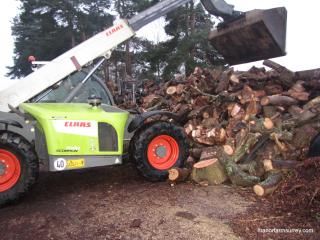
The timber we chip for bedding.
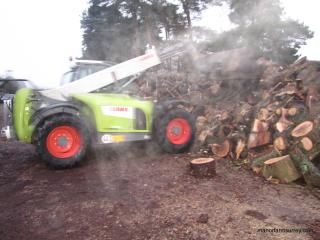
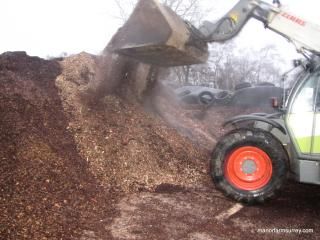
Wet wood chip being pushed up.
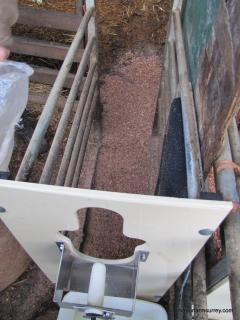
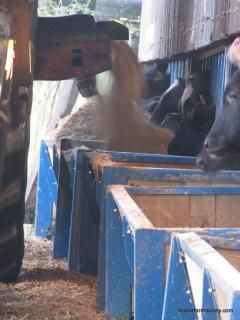
Sawdust used in various barns; here in the milk booth.
The winter rounds with the feeder wagon will not stop for Christmas, weekends or holidays and the cattle need to be checked on a daily basis for health and wellbeing.
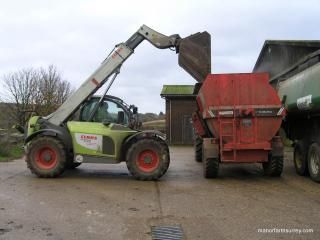
The feeder wagon is filled with home grown produce as well as vitamins and minerals, citrus and starch and the troughs are filled every other day to allow the cattle to feed on an ad-lib basis.
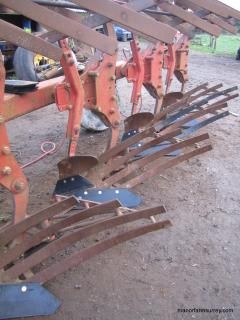
Ed has serviced the plough, fitting new metal shares, skimmer points and skimmer mould boards, ready to plough 140 acres for peas at Whitedown.
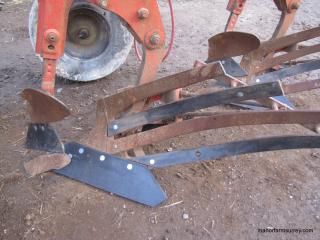
Quite artistic in its own way.
Peas are particularly sensitive and require a very good seed bed. The soil will be ploughed now and allowed to weather-down until next March when it will be power harrowed and drilled once the seedbed temperature reaches 8-10 degrees.
FGS Organics are contractors who take paper trimmings (tiny fragments of paper that are too short to bind together as a recycled paper product) from a paper mill in Kent, add water which creates a sludge and transports it to farms around the country to utilise this organic matter.
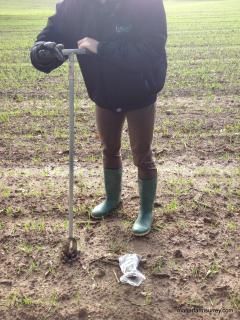
FGS take soil samples to check nutrient levels
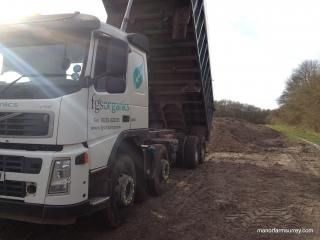
100 Lorries have delivered 2,500 tonnes of paper sludge over the last couple of months, but this is just a fraction of the quantity delivered to us in a year. Although we are pleased to utilise the paper sludge, farm anaerobic digestate would be far more beneficial for soil structure and soil management. On-farm anaerobic digestion is a circular process from the farm and back to the farm, and without hundreds of lorries travelling thousands of miles delivering either paper sludge, sewage sludge or fossil-fuel fertilisers.
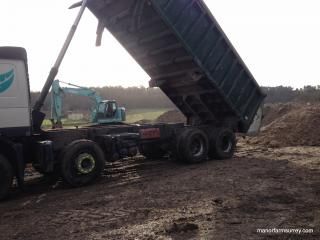
The paper is pushed into neat piles where it waits until next year, when it will be spread as fertiliser, this is when it smells for a few days when the natural organinisms of this organic matter are disturbed.
The land we farm creates hundreds of tonnes more food and fuel crops than it did during EDG Matthews time farming here in the 1930’s and 40’s this is due to new technology and science helping to improve soil management and crop varieties amongst other things.
The farming community has increased the tonnage it supplies to the market over the years whilst the cost of production has risen steadily, so it adapts and evolves, seeking innovation to improve soils and grow increased quality and well yielding crops on the same acreage.
There is some discussion as to the ‘lifetime’ left in arable soils being in the region of 100 years, and whilst humans ask a lot of the soil, we would like to use the best available soil conditioner whilst reducing carbon emissions.
A group of A Level Economics students from Ellen Wilkinson School for Girls visited the farm in November.
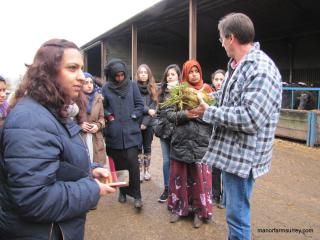
In general terms the students wanted a better insight into the market theory they have to study, to discover how we make decisions about which crops to grow and animals to rear, the impact of EU and CAP regulations, farm subsidies and relationships with supermarkets and other large distributors.
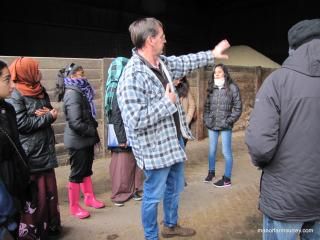
It led to a fascination morning in a variety of locations; farm yards, grain stores, barns and the business park.
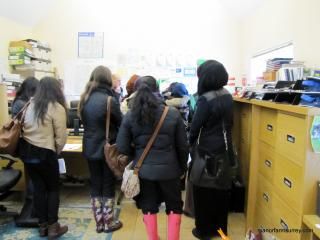
Time was also spent in the farm office discussing and viewing trading sites and commodity prices which are an integral part of this Agricultural business.
Laurence has taken over as sector board chairman for combinable crops and sugar beet for Red Tractor Assurance. He looks forward to the challenges of this new role.

Back