


 EDUCATIONAL VISITS Manor Farm is fully accredited by the Countryside Educational Visits Accreditation Scheme (CEVAS)
 THE FARM
Contact us for availability.

Archived News
25th August 2014
We have 500 acres of oil seed rape to drill but due to the big Claas tractor breaking down last week we still have 150 acres to get in the ground.
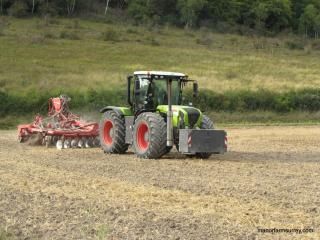
The soil is cultivated and then spread with recycled paper, before a further turn with the cultivator which also drills the seed at the same time.
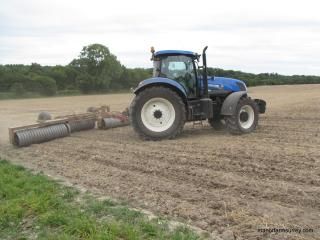
Finally the fields are rolled to compact the soil over the seed and before the rain made the dirt too sticky to enable it to be worked.
Although we didn’t use neonicotinoid sprays; the recent withdrawal of crop protection also removed the seed dressing which after years of research has protected the oil seed rape plants from flea beetle at the critical point during plant emergence and through the growth of the first few leaves.
The seed dressing is designed to protect the crop for the first few weeks of growth in the autumn as the plant establishes which is just when the flea beetles feed on the leaves and lay their eggs in the soil, with the larvae climbing up the stem to feed in the leaf petioles (between stem and leaf).
Flea beetle is the most important insect pest of autumn-sown oilseed rape and can significantly reduce establishment and yields and without the seed dressing to protect the emerging plant, growers are expecting a challenging season.
The seed-bed preparation and good fertilising are important to help establish the plants and ‘get them away’ before the flea beetle gets a hold on the crop. The recycled paper is high in sulphur and nitrogen which oil seed rape requires as well as humus and many other nutrients, it helps provide a good soil structure.
We have begun by drilling an increased seed rate to allow for possible flea beetle damage and will now have to inspect every field almost every day until the crop has established. We will be looking out for the ‘pepper pot’ holes in the new leaves as the flea beetle can swiftly annihilate a crop.
Lighter soils can be at greater risk but this at times will be unavoidable due to crop rotations and of course for those who only have lighter soils.
Some predict a likely increase in the use of pyrethroid insecticides to protect crops until they reach a stage where beetle damage will not result in major losses and in the worst hit areas crops may need to be sprayed every seven days for three weeks, however flea beetle resistance to Pyrethroid’s is becoming more of an issue.
Back