


 EDUCATIONAL VISITS Manor Farm is fully accredited by the Countryside Educational Visits Accreditation Scheme (CEVAS)
 THE FARM
Contact us for availability.

Archived News
20th April 2014
What began as a throat infection the last night I was in the lambing shed, soon became worse as we took three finished pigs down to the abattoir early one morning and brought the rams off the hill during the only wet day in weeks. I was shocked as this quickly took hold and I developed pneumonia.
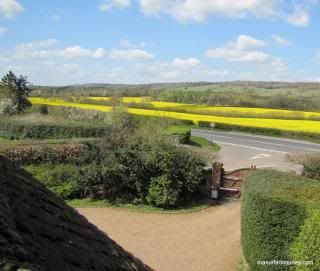
With various warnings still ringing in my ears and with as much energy as a hibernating tortoise I took heed of Doctor’s orders for complete rest and all I’ve managed to see of the farm for over a week is the spectacular flowering of oilseed rape from the farmhouse window.
This has left me with a sense of living in a parallel universe whilst staff, contractors, students and our boys have been working flat out on the farm.
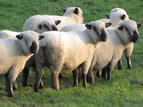
About a week before lambing was due to begin, Christopher found one of the first timers had aborted her twins in Homefield which is not a good start when the flock is small, however these things do happen and are sadly part and parcel of farming.
The remaining ewes all lambed successfully and with fine weather they soon moved out from the lambing shed onto grass. Christopher’s flock has increased by the grand total of 13; seven ram lambs will be reared for meat whilst the six ewe lambs will be put to a ram in 2016.
It’s time to buy a replacement ram as Hugo has been sold to prevent him coming back onto his daughters. He has moved to a farm in Uckfield and I was quite sorry to see him leave as he’s been such a good natured ram and no trouble at all.
Of the five Belted Galloways due to calve this April, one aborted at seven months and two heifer calves have been born; one of those was born today so I may well call her Easter! as this is a time of death and new life.
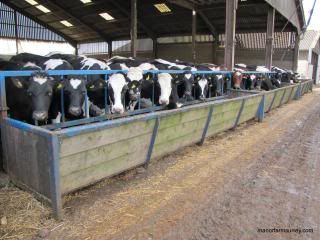
Another 17 Friesian ‘fat cattle’ (they are not actually fat, it’s just another term used for finished cattle) have gone to slaughter but the price has slumped once again, reducing the amount paid by approximately £80 per head. If the Friesian cattle have reached the conformation and weight required by the abattoir then we are at the mercy of the price offered on the day they are due to leave.
Field work on the farm has been intense for the past few weeks and with unusually warm, dry weather for the time of year, the preparation of seed beds is the best we have had for a number of years. Drilling started two weeks earlier than normal because the sunshine since March has warmed up the seed bed to the required minimum of 12 degrees for maize to germinate.
Last year’s stubble fields have been spread with fertiliser; contractors have spread the recycled sludge and we hired two muck spreaders to spread the farmyard manure. The fertilisers have been cultivated into the soil using the combination cultivator; discs, tines and rubber packer (roller) which has been followed by two power harrows to create the best seed bed possible.
Next it was the turn of the fodder beet drill at Paddington and Raikes and then two maize drills at Lemons, Raikes, Crossways, Paddington and Tillingbourne.
The power Harrowing was completed on Good Friday and the drilling finished Saturday.
Winter wheat, barley, oats, triticale and oilseed rape were all sown last autumn except for 20 acres of wheat that couldn’t be sown due to the ground conditions being too wet. The 20 acres has just been drilled with spring barley.
The poorer sandy soils are not so good for growing malting barley therefore most of our barley is sold for animal feed.
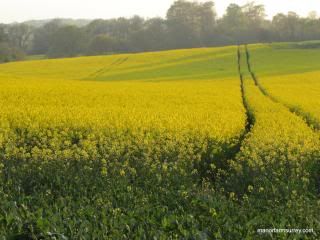
Oilseed rape has been grown commercially in Europe since the 13th Century when it was primarily used as a fuel for lanterns. The rapeseed we grow now is purchased by a grain merchant who sells it for biodiesel or as vegetable oil.
The oats, triticale and the grass herbage seed are all being grown on contract for seed.
Back