


 EDUCATIONAL VISITS Manor Farm is fully accredited by the Countryside Educational Visits Accreditation Scheme (CEVAS)
 THE FARM
Contact us for availability.

Archived News
3rd April 2014
The fields, woodland and North Downs were shrouded in creeping smog which spread in over the landscape from late afternoon; it was quite an eerie sensation as the sunlight was blocked by the smog caused by the dust and sand blown from North Africa, approximately 2,000 miles from here.
There are so many jobs to be done on the farm when spring arrives and it seems they all need to be done at the same time!
Routine jobs such as checking and feeding livestock and bedding up the inside cattle, the spring time fertilising and power harrowing in behind, spraying fungicide and weed control and drilling the next crop of fodder beet to name just a few.
Add to this the annual checking of every fence-line before the cattle can go out to the fields (once the grass begins to grow). This normally leads to a few repairs, however this year is different because dozens of mature trees were brought down by the recent storms and have flattened fences in most of the grazing fields; imagine half a dozen full grown Beech trees across the fence-line of one field alone.
Many of our barns were damaged by the winter storms but the worst hit was at Coast Hill where roof sections were carried 100m away onto the crops and the framework twisted. A new barn is now under construction.
With two staff off this week David and Laurence have been multi-tasking and doing their own work plus that of the others! mixing the cattle rations and feeding the inside livestock and using the straw chopper to bed up the barns.
Last week we hosted an Educational visit for The Link Alternative Learning Centre with a group of 14-16 year olds. We adapt each of our visits according to the age group and it’s interesting for us to discuss everything from cattle nutrition and environmental work through to global issues that affect farming such as the weather in America or recent issues in Ukraine both of which affect commodity prices world-wide.
I had the sense that the pupils were quite surprised about some aspects of the economics of farming and that it was quite an eye opener and not the stereotypical life so often portrayed.
Polly, our sow was popular and she enjoyed having some new visitors to scratch her back!
I think each of the young people learnt something new from the farm visit which will link in with their ongoing studies and a future visit to Four Gables Food Academy where they will be looking at the preparation and cooking of British produce.
Today it was the turn of Southfields Academy and a group of 15-16 year olds who are undertaking a catering course; they came out on their visit despite it being an inset day and their peers being off school!
The group were engaging and asking many questions relevant to their school studies about the sourcing of food and fresh produce. As with all groups we discussed the legal requirements of cattle passports and ear tagging but went into more detail about Farm Assurance and the traceability of produce as these pupils have been learning about the Lion Quality Mark scheme for eggs and the Red Tractor logo which indicates produce from farms that are independently inspected in all aspects of their farming.
What has inspired me through both of these visits is the enthusiasm of the teaching staff without whom such visits just wouldn’t happen, the enthusiasm of the teachers has given the pupils this opportunity to broaden their knowledge and horizons.
My aim is to provide enjoyable Educational visits to a ‘real’ working farm which I hope will in turn inspire people to keep asking questions about where their food comes from and to look at the wider role of farming in the UK and world-wide.
The ‘fat stock’ are being weighed and graded every week as they get close to finishing. 17 fat stock went to the abattoir on Friday and the final 5 that didn’t fit on the lorry went on Monday.
Carcass classification or assessment is based on the conformation of the animal and the fat covering. The abattoir are asking for R4L grading and anything above that will be given a bonus but anything below that grading will be penalised.
Laurence was particularly pleased with the gradings from last week’s stock as they were all above the preferred grading of the abattoir and supermarkets resulting in a rare increase in the pence per kilo paid by the abattoir.
These results are due to the weighing and assessment of the livestock here on the farm in the last months and careful analysis of the proportion of each element of the feed that we mix up for the cattle.
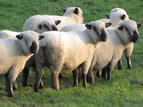
We have had a ‘flying flock’ of 180 sheep on the farm since February with a further 80 arriving later. The owner is a tenant farmer in Hampshire who buys sheep in the autumn and grazes down grassland on other farms around the country throughout winter. The sheep have eaten down the herbage seed leys at Raikes and Manor, removing all the old growth before it starts to grow afresh this spring. This will improve the quality of the herbage seed crop.
On a final note; our first 2014 Belted Galloway calf was born at Raikes farm and she has a perfectly formed belt which is pristine clean! The calf will need to be ear-tagged tomorrow, but catching her could be fun as she is skittering around the field already.
Back