


 EDUCATIONAL VISITS Manor Farm is fully accredited by the Countryside Educational Visits Accreditation Scheme (CEVAS)
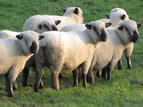 THE FARM
Contact us for availability.

Archived News
8th August 2010
Recycled paper waste is being spread on local fields over the next couple of days. The company who undertake the work is licensed by the Environment Agency.
The paper waste, once of plant origin is now rotting plant material and rotting plants give off a smell as cellulose is broken down. Ed will disc the ground after the material has been spread so that it’s incorporated into the soil. The paper will compost the soil and enrich it with nutrients from the paper, reducing the amount of fertilizers required and preventing the needless addition of the paper to a landfill site or incinerator.
Although there may be an unusual smell for a few days, the recycling of paper waste from mills in this way, benefits the environment and hopefully each recycling project that we undertake as individuals at home or at work, will help benefit our World.
I have just returned from Shalford where Laurence is still harvesting spring wheat, hopefully he’ll be finished before midnight. The yield is low at Shalford due to the dry weather when the crop was first establishing itself, the straw is extremely short and some fields have quite thin coverage of wheat. The ground is sandy with large surface stones occasionally being taken up into the combine harvester causing another halt to remove the stones.
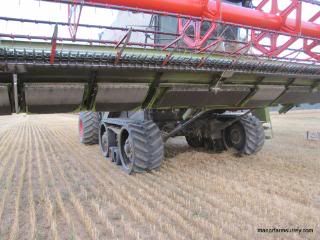
Laurence has to crawl into confined spaces and under the combine harvester on a fairly regular basis.
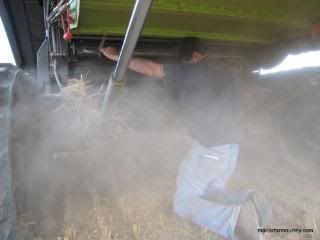
As he pulls straw and grain from the combine to find the rocks, Laurence is engulfed in dust.
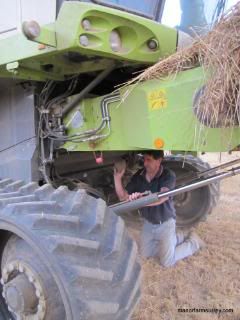
During a break down last week Laurence had to drive to Micheldever (2 hour round trip) to fetch a part, returned to the farm, fixed the combine and started cutting once again. But despite the draw backs Laurence says the harvest is going fairly well. At least the dry weather has allowed the harvest to tick along, straw to be baled and brought in from the fields and so far not having to use the grain drier. However, heavy rain is forecast for Tuesday and Friday.
The plan is to finish the spring wheat at Shalford and move the combine back here at 4 o’clock one morning while the roads are quiet. Then continue with spring wheat at Hammer Fields, Coast Hill, Crossways and Raikes and Triticale at Paddington. If all this is completed by next weekend there will be a two week break from harvest until the spring rape is fit to cut. During that fortnight the harvested fields will have the ground prepared in readiness for drilling the next crop as quickly as possible, because we expect it to rain long and hard once it eventually decides to return to our corner of Britain!
The price of wheat went fairly crazy last week, in part due to the reaction of the markets to the fires in Russia and the floods in Pakistan which of course will result in less wheat production World-wide. Things have settled down a little now and the industry knows that the last harvest carried the biggest wheat stocks ever and so producers of wheat based products still have these stores to draw on. It is next year that will be of more concern due to the low yield World-wide during this harvest and by next year the stores will have been used.
It’s interesting how the facts are distorted by the time the ‘news’ is projected by the media. A report by the BBC stated that ‘wheat amounts to half the price of a loaf of bread’ but that’s nonsense. If a loaf of bread costs £1.20 and weighs 800g this would mean a tonne of loaves would cost £1500 (not taking account that the weight of a loaf could be in the region of 35% water!).
Fact: milling wheat today is £150/tonne which means that wheat accounts for 10% of the price of a loaf at today’s wheat prices, but normally wheat amounts to 7% of the price not 50%. It would be good if the facts weren’t distorted for human consumption.
We can no longer source the pea and bean pellets which we’ve simply had to feed the cattle for a number of weeks, due to there being absolutely no grass anywhere on the farm. Finally, Laurence sourced an alternative feed; a combined pellet and meal but this is a different consistency and has to be shovelled into troughs as the cattle aren’t able to pick this consistency up from the ground. Next job: finding enough food troughs to move into the fields which didn’t previously have one.
The cattle at Abinger Manor are being moved into buildings at Raikes for their last six weeks and the cattle at Upfolds and Lemons will be moved into the fields they vacate which is an easier location for feeding. That will keep Amanda, Sam and George more than busy for a day.
Back