


 EDUCATIONAL VISITS Manor Farm is fully accredited by the Countryside Educational Visits Accreditation Scheme (CEVAS)
 THE FARM
Contact us for availability.

Archived News
9th February 2009
What fabulous weather for walking in, it’s cold and wet and I didn’t see another sole in over an hour! Yesterday was so very different, there were people everywhere! I came across a very nice group of people who were not on a public right of way, but were walking along one of our conservation headlands on the edge of an arable field.
They were very polite but were not really aware that they should have remained on the public footpath.
Obviously as farmers we are here to produce food and to earn a living but we do so with regard to wildlife, conservation and public rights of way (ROW). Integrated Farm Management combines the best of traditional farming methods with modern technology, supporting a viable farming business, producing wholesome, affordable food within a countryside rich in wildlife.
We are actively encouraging wildlife by undertaking conservation projects around the farm or leaving quiet areas to increase species diversity and numbers.
Projects include hedge-laying, coppicing, pond restoration, reversion of arable land to low input grassland (at the foot of the downs) and provision of 6 metre field margins (allowing a variety of grasses and flowers and associated insects). Rotational options are where we leave stubbles for the winter and spring for ground nesting birds (such as Lapwing). Conversion headlands have lower inputs on the first 24m of crop and no insecticide application.
Unfortunately when walkers, horse-riders and cyclists leave the public right of way they disturb many of these wildlife areas which we are providing as a refuge and feeding area for birds, butterflies, plants and mammals. Apart from generally disturbing wildlife, there are some very sensitive grassland areas and headlands which will be damaged by hooves and bike wheels.
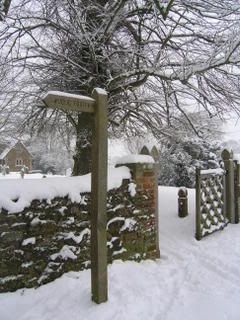
Even as a keen young 17 year old, leaving the urban sprawl behind me and setting out on my pre college year on a nature reserve, I was aware that the countryside could be enjoyed by everyone using public rights of way. I never presumed I could or should leave the ‘public highway’.
I have a shelf full of Ordnance Survey maps covering the areas in which I have walked during almost thirty years! Maps are really quite fascinating and full of so much information, not just showing us where we are or where we can go, but also providing us with topographical and historical details. I think that planning a walk using an OS Pathfinder map is all part of an enjoyable day out.
As I walked back from the downs yesterday, along public footpath 115, I couldn’t fail to hear lots of whooping and calling from a 30 or more runners down below. I was concerned to see some people running in the fields, not on any public path.
They were running over our crops which are just at seedling stage and very vulnerable to trampling especially with the soil being so wet and slippery. Our orderly rows of tiny seedlings are our business. This is our ‘factory floor’ which unlike other factory floors, has public paths criss-crossing it along definitive routes.
This large noisy group turned out to be from the Surrey Hash House Harriers. The main group were following a trail set out by someone up the front, but unfortunately there seemed to be no regard for the land use, the owner or in our case tenant farmer or for the peace and tranquillity of this countryside.
As I got closer to Park Farm there was so much hollering in Deerleap Wood (which does not have public access), that three terrified Roe Deer were flushed from their daytime shelter and the protection provided within the woodland. The deer leapt over three fences and a ditch in their haste to escape these people, leaving them exposed, frightened and vulnerable up near the railway line.
My experience of public access over the years has been from a variety of angles; as a ROW user (keen walker, used to horseride, motorbike and mountain bike), Countryside Recreation student, YTS Supervisor (training young people in countryside skills), Countryside Ranger, National Trust warden, Rights of Way Officer and latterly as a farmer’s wife and organiser of educational school visits to our farm.
I think this varied experience provides a practical view of ROW when trying to balance public access with the needs of wildlife, farming and the countryside. It is just getting this message across to others that is sometimes less than easy but that is one reason for giving guided walks, creating a website and farm information leaflet and offering school educational visits to manor Farm.
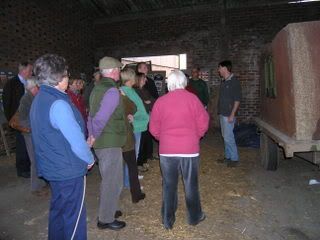
Guided farm walk 2008
We are fully supportive of sensible and lawful access to the countryside with consideration to other rights of way users, wildlife and consideration to the farmer, his ‘factory floor’ and Integrated Farm Management.
We are blessed in Surrey to have almost 3400 kilometres (2112.76 miles) of footpaths, bridleways and byways. There are plenty of public rights of way for the various user groups, plus large areas of downland and lowland heath owned by the National Trust, Surrey Wildlife Trust and District Councils, for those who prefer to wander more freely - for access information to please visit the land manager's website.
So do please visit the countryside but don’t forget your OS Pathfinder map(1226 for this area) and follow the public rights of way. Thank you!
Back